Lockheed Martin
Precision is the product. The design had to prove it.
Designing for Lockheed Martin means designing for a brand where
the standard is engineering-grade.
Lockheed Martin had just completed a brand refresh — updated identity, tightened system, stricter standards. Every touchpoint in their talent acquisition ecosystem needed to be brought into alignment simultaneously: career site, digital advertising, social media, print, and convention environments for national hiring events.
The challenge wasn't creative freedom. It was the opposite. Lockheed's brand governance is among the strictest in any vertical — defense-industry compliance, enterprise approval chains on every deliverable, zero tolerance for off-brand execution at any level. The creative problem was making recruitment marketing feel aspirational and human inside a brand system built to project precision and authority. Those two things don't automatically coexist.
Lockheed Martin is the world's largest defense contractor — a Fortune 100 company operating across aerospace, defense, and security at a global scale. Their brand carries the weight of that position in every pixel. Designing for Lockheed means understanding that the brand isn't just an identity system. It's a statement of capability. The recruitment platform has to attract the engineers, scientists, and defense professionals who are good enough to work there — and the creative has to feel worthy of the brand they're being asked to join.
One CD above. One designer.
Five disciplines. Zero margin for error.
Same two-person senior creative partnership as Wegmans — same CD, same dynamic. The CD owned the client relationship. I owned the artboard. Every visual decision on the account came from me, operating within one of the most compliance-sensitive brand environments in recruitment marketing.
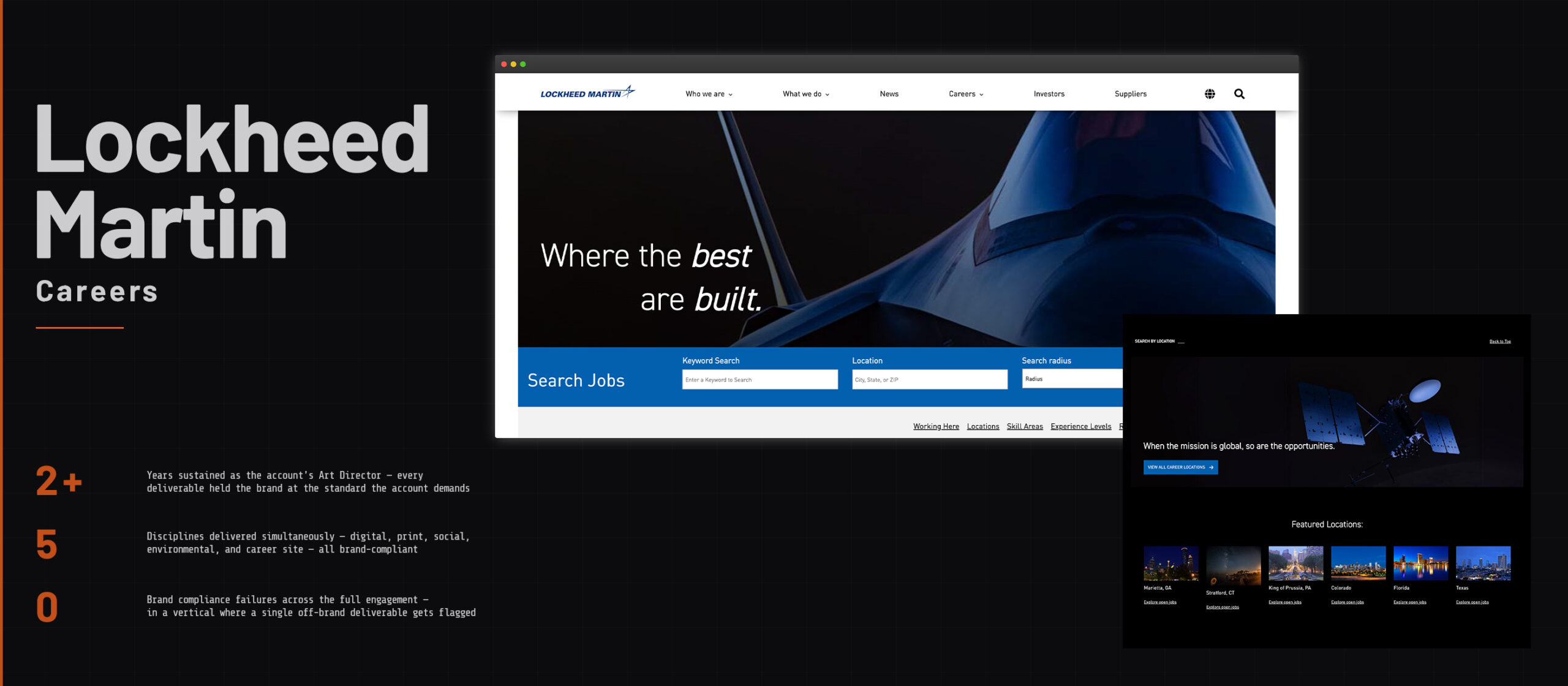
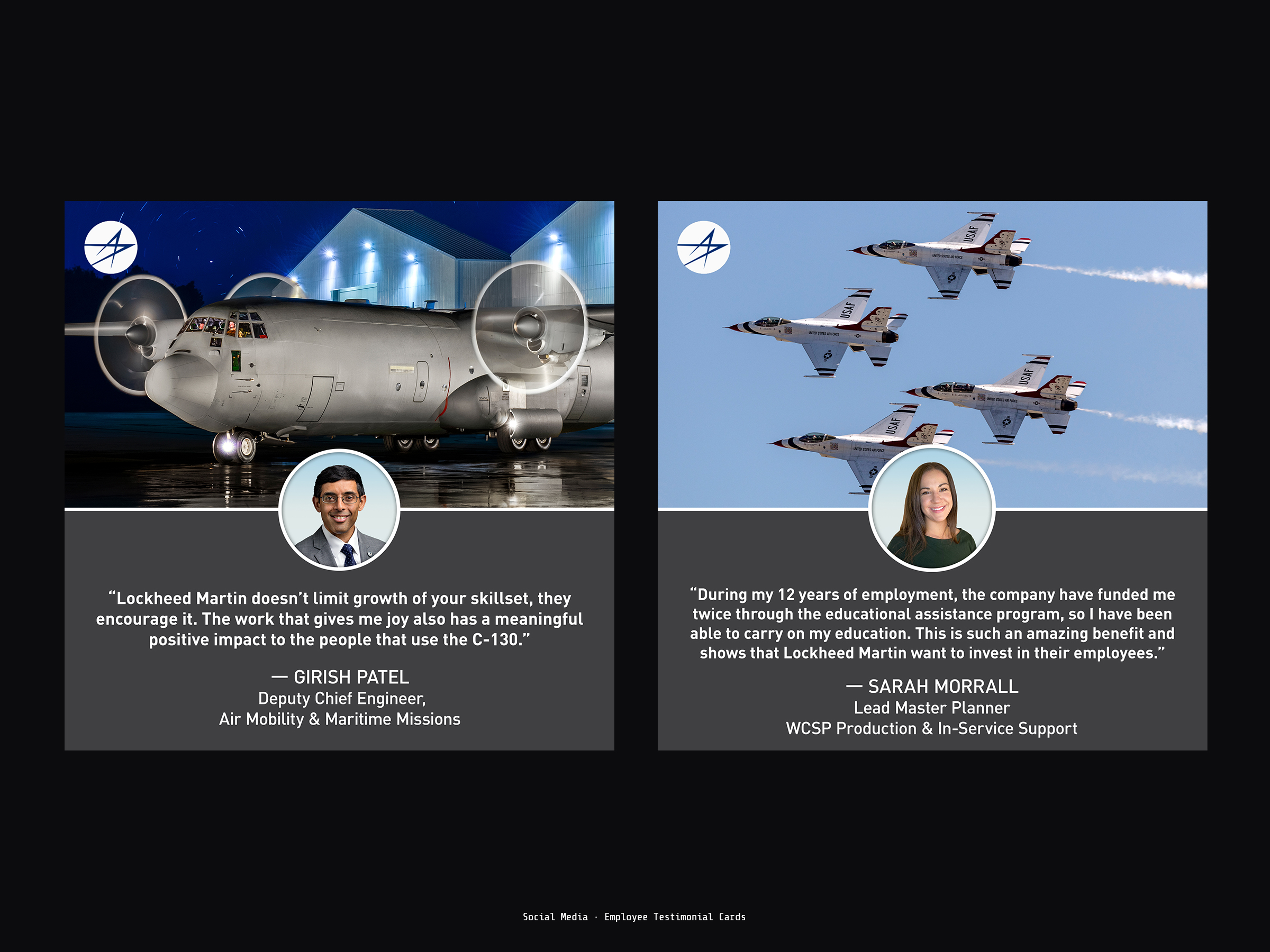
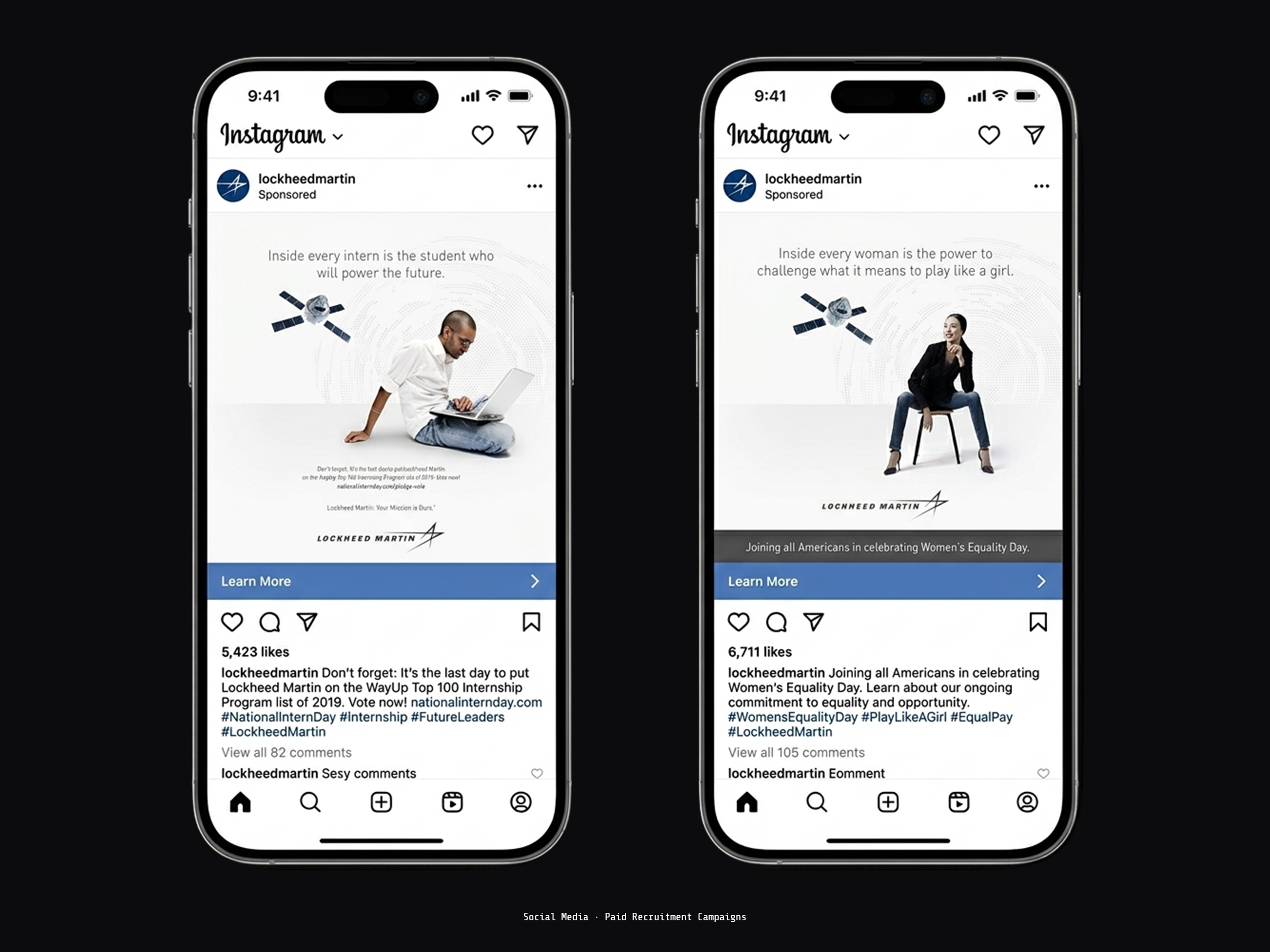
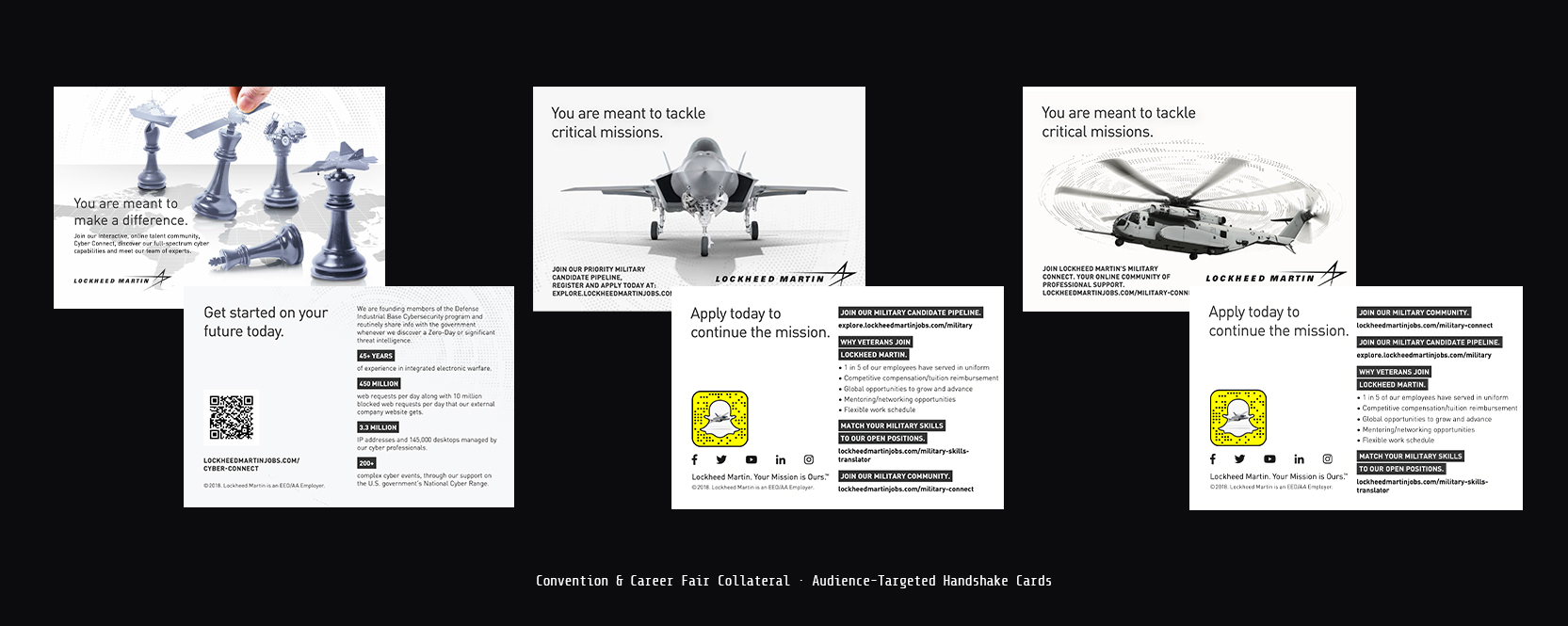
Every deliverable held the brand.
In defense, that's the whole job.
In most verticals, brand compliance is a constraint you work within. In defense, it's the evaluation criteria. Every deliverable either holds the standard or it doesn't. Over the course of the engagement, every deliverable held it — through a brand refresh period, across five disciplines, under enterprise approval processes designed to catch what doesn't. The work is the proof.